Romania: The Transfăgărășan
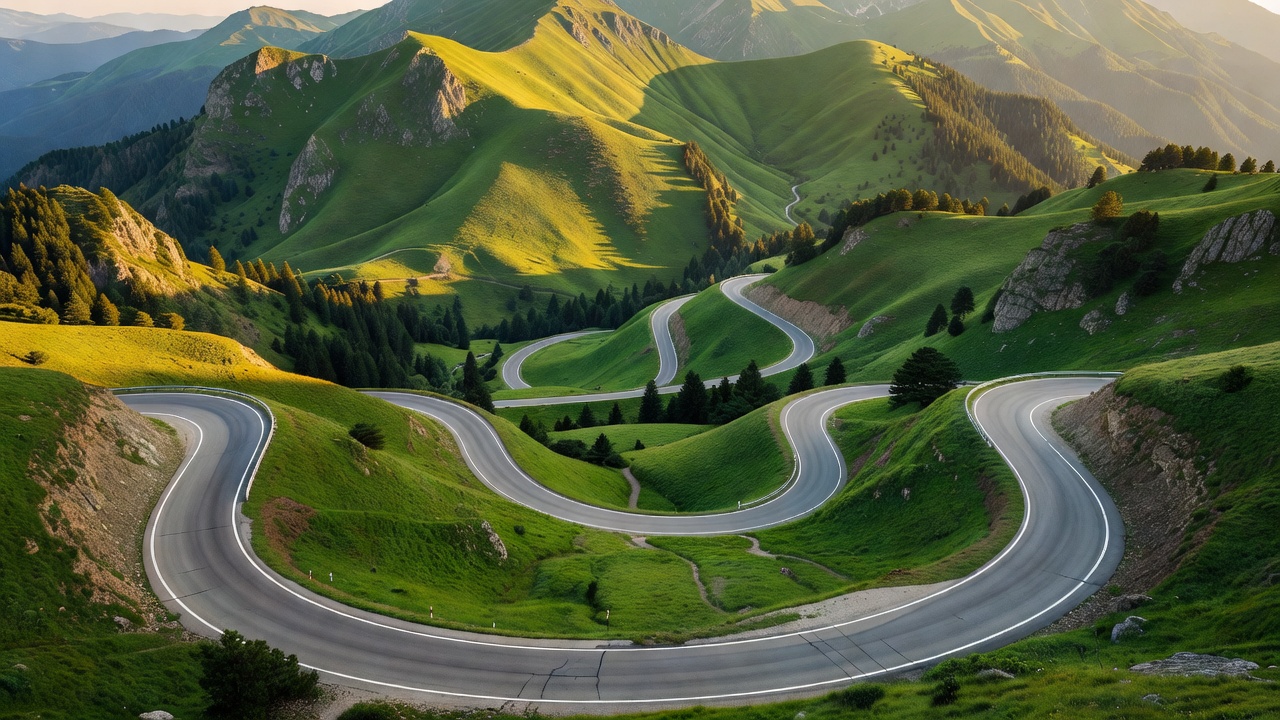
Few roads possess an origin story as imposing as the landscape they traverse. The Transfăgărășan Highway (officially DN7C) was constructed in the early 1970s under the orders of Nicolae Ceaușescu. Built as a strategic military route across the Southern Carpathians in response to the 1968 invasion of Czechoslovakia, it required enormous quantities of dynamite and exacted a heavy human toll during its creation.
Today, its military utility is a footnote compared to its status as a pilgrimage site for automotive enthusiasts. Cutting through the Făgăraș Mountains, the road connects the historic regions of Transylvania and Wallachia, offering roughly 90 kilometers of sweeping corners, viaducts, and unadulterated driving joy.
The Route & Geography
The journey typically begins in the north, departing from the village of Cârțișoara. The initial ascent is dense and forested, climbing steadily before breaking out into the spectacular glacial valley of Bâlea. This northern section is the most photographed, featuring a ribbon of asphalt that seems to have been dropped like string onto the valley floor, weaving back and forth against the topography.
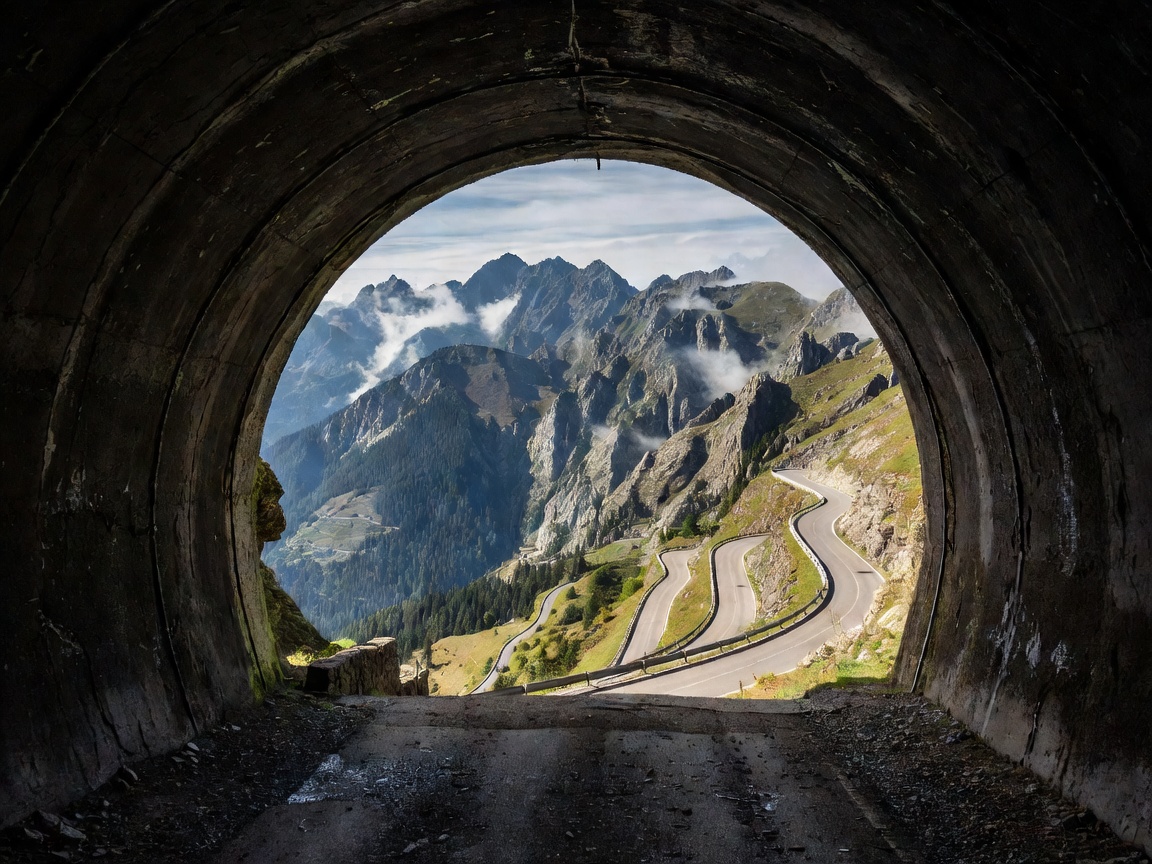
At the zenith lies Bâlea Lake, a glacier lake sitting at 2,034 meters. From here, the road plunges into the Capra Tunnel—the longest road tunnel in Romania at nearly 900 meters—before emerging on the southern side. The descent towards the Argeș River and the Vidraru Dam is markedly different: less dramatic but offering faster, flowing sweepers through dense pine forests.
Driving Dynamics & Technical Specifications
Where the Stelvio Pass is punishingly tight, the Transfăgărășan is sprawling and rhythmic. The corners here are generally wider, allowing you to carry more speed and link sequences together smoothly. It rewards momentum and precise steering inputs rather than outright braking power.
A well-sorted grand tourer or a high-performance saloon is arguably the perfect tool here. The sweeping nature of the road accommodates wider tracks and longer wheelbases better than tighter alpine passes. However, one must remain vigilant: the road surface is famously inconsistent. Smooth patches of freshly laid asphalt can quickly give way to broken tarmac and severe potholes, requiring compliant suspension and a watchful eye.
Pros and Cons
The Pros: The sheer scale and flow of the corners make this an incredibly engaging drive. The scenery is wild and less commercialized than Western European equivalents. It offers a genuine sense of isolation and adventure.
The Cons: The surface quality is a major limiting factor for very low, stiffly sprung sports cars. Additionally, the southern section near the Vidraru Dam can become monotonous, heavily forested, and prone to encountering stray livestock or even brown bears crossing the road.
Practicalities & When to Go
Like all high-altitude passes, the snow dictates the schedule. The high sections of the Transfăgărășan are typically only open from late June to late October. Timing is everything.
Weekends in mid-summer bring heavy domestic tourism. To string together a flowing drive, arriving on a Tuesday or Wednesday morning in September is highly recommended. The air is cool, the engines breathe better, and the vistas are clear of the mid-summer haze. Accommodation near Bâlea Lake is available but basic; many prefer to stay in the nearby city of Sibiu and tackle the road as a day trip.